
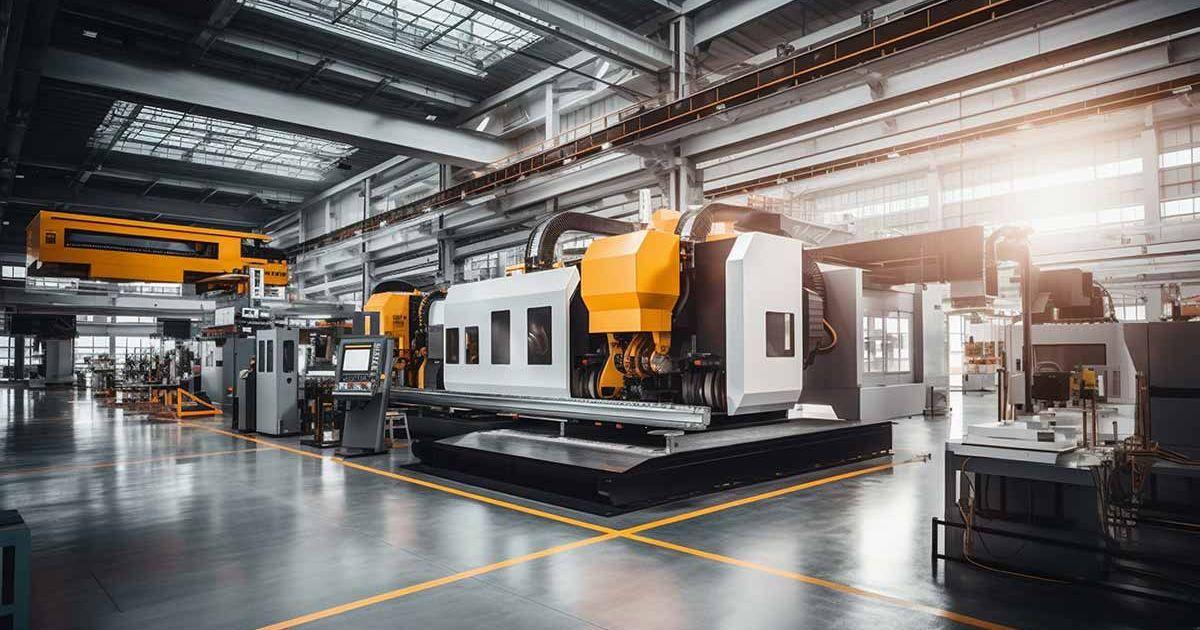
The industrial machinery sector continues to evolve as manufacturers respond to changing customer requirements, technological innovation, and global competition.
Several major developments are influencing machinery investment and industrial production.
Automation and Robotics
Manufacturers are increasingly integrating robotic systems into production lines. Automation supports repetitive operations, improves manufacturing consistency, and helps companies optimize production capacity.
Artificial Intelligence in Manufacturing
AI technologies are being used for production monitoring, quality inspection, predictive maintenance, and process optimization.
By analyzing operational data, manufacturers can identify inefficiencies and improve machine performance.
Electrification of Construction Equipment
Electric construction machinery is becoming an important development in the industry.
Electric excavators, wheel loaders, and compact equipment can help reduce local emissions and noise, particularly in urban construction environments.
Digitalization and Connected Equipment
Connected machinery enables operators and fleet managers to monitor equipment performance, fuel consumption, maintenance requirements, and operating conditions.
Digital systems can improve fleet management and support more informed operational decisions.
Supply Chain and Equipment Availability
Machinery manufacturers continue to focus on supply chain resilience, component availability, and efficient distribution networks.
Spare parts availability and after-sales support remain important factors for equipment buyers.
Conclusion
The industrial machinery market is moving toward greater automation, digitalization, electrification, and operational efficiency.
Businesses that understand these developments can better evaluate machinery investments and identify new opportunities in the global industrial sector.